ON-DEMAND WEBINAR
When HCP Decisions Move Faster Than Your Campaigns — Access the Recording
2026-07-29
For Pharma Brand Marketers

Stop Optimizing for Engagement. Start Optimizing for Rx.

You're managing multiple products, mounting pressure to prove ROI, and campaigns that require manual handoffs. Let ODAIA Marketing Intelligence orchestrate personalized HCP campaigns for you and connect every dollar back to real prescribing outcomes.
Black background with blue concentric angular lines forming a geometric pattern in the top right corner.
Sound Familiar?

The Data Exists. The Connection Doesn't.

Most pharma commercial teams have more data than they can act on. The problem isn't access, it's connecting the right signals to the right decisions at the right time.

Engagement ≠ Rx.

Your campaigns generate opens, clicks, and attendance. But none of that tells you how many physicians actually wrote. Defending spend becomes guesswork.

Manual work compounds every week.

Segmentation runs quarterly. Agency handoffs introduce lag. By the time a tactic goes live, the insights behind it are already stale.

Field and digital teams aren't aligned.

Your reps and your digital team are working from different data. HCPs get contacted too often, too rarely, or with the wrong message, because no one sees the full picture.
How It Works

From Strategy to Prescription — Automatically

Replace static targeting, manual handoffs, and engagement-only measurement with a system that evaluates every HCP daily, dispatches campaigns automatically, and connects every touchpoint back to prescribing behavior.
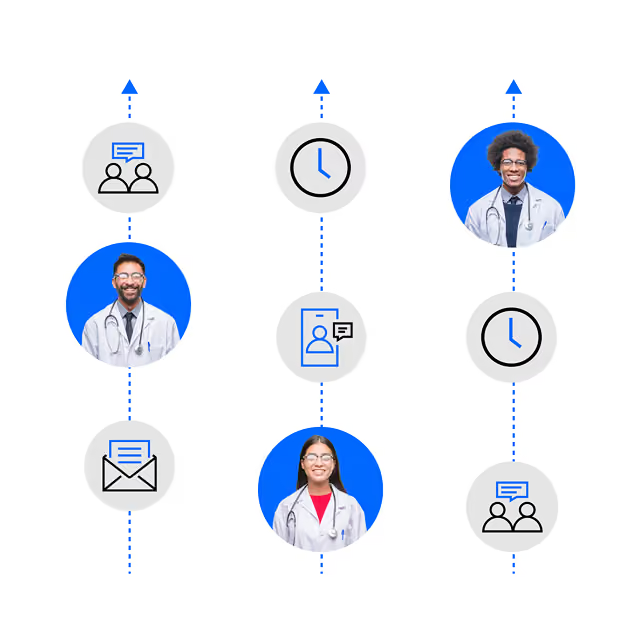
Better Orchestration

Focus on Strategy. Automate Delivery.

Daily HCP recommendations across every integrated channel. No manual uploads, no agency handoffs.
  • Ranked channel, message, and timing recommendations for every HCP, refreshed daily
  • Automatically dispatched to media partners in their native formats
  • Example: One brand has 230 unique engagement sequences orchestrated in a single week
Rx Attribution

Connect Marketing Spend to Rx

Most programs measure clicks. ODAIA measures prescriptions.
  • Each HCP's engagement statistically tied to downstream Rx outcomes
  • Performance measured against four weeks of Rx data per tactic cycle, not opens or clicks
  • Pre-launch simulations + post-cycle results reports, so every output is explainable

Always-on System

Follow Signals, Not Schedules.

Conventional targeting follows prescribing history. ODAIA follows behavioral signals.
  1. Forward-looking engagement signals identify HCPs on the verge of adopting, not just those already writing
  2. Journey detection means HCPs are mapped to your predefined journeys, or automatically categorized by product adoption stage
  3. The model updates daily. New signals from every cycle feed the next one
How It Works

Data In, Campaigns Out

ODAIA uses your existing data and integrates with your agency and media partners. Our team handles setup. Your team focuses on strategy.
Download MI Product Sheet
1
Step 1: Evaluate

Score every HCP, daily

The platform dynamically scores every HCP from 10–0 based on prescribing patterns, channel eligibility, and journey stage, and updates with every data refresh.
2
Step 2: Orchestrate

Personalize each campaign

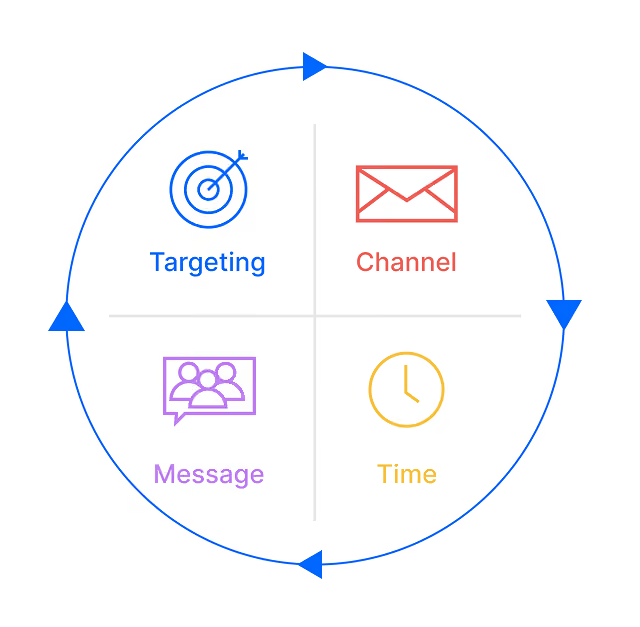
The Sequencing Engine generates a personalized recommendation for the right HCPs: channel, message, and timing. No bulk delivery. No broad personas.
3
Step 3: Activate

Automatically send approved content

Approved recommendations go directly to your media partners in their native formats so messages arrive at the right moment.
4
Step 4: Attribute

Measure Impact on Rx

Every tactic is connected to downstream prescription outcomes. Results feed back into the model so each cycle is optimized based on the last.
Marketing Intelligence Results

How ODAIA Connects Campaigns to Commercial Outcomes

In a recent customer deployment, ODAIA Marketing Intelligence evaluated a universe of 70,000 HCPs — continuously identifying who's ready to engage, and the right message, channel, and timing to move them.
Read case study
“Rather than attempting to reach tens of thousands of clinicians with uniform messaging, the campaign prioritizes physicians whose signals suggest meaningful prescribing potential.”
Director of Brand Marketing
Specialty Biopharma Company
High-value HCPs Identified
33.5k
Identified as high-value HCP and received a tactic via dispatch
HCP Engagement
26.8k
80% engagement rate among HCPs who received a tactic
Rx Conversion
10.6k
39.7% conversion rate among engaged HCPs, within the campaign window

FAQ's

What pharma marketing & brand teams ask before getting started.

We're already using a CRM and media agencies. How does this fit in?

ODAIA connects to your existing stack — Veeva CRM, Salesforce, and 10+ media and agency partners — through bidirectional APIs. The platform feeds recommendations into your existing workflows and partners, not around them. Setup is managed by our team.

We've tried AI tools before. They're black boxes.

Every ODAIA recommendation comes with a simulation report before launch and a results report after. Your team can see exactly what the system recommended, why, and what happened so you're always in a position to explain outcomes to leadership.

Our data isn't in great shape. Is that a blocker?

ODAIA works with the data you have. The platform uses your prescribing data, CRM records, and engagement signals. You don’t need to build a data-schema from scratch.
In the early stages, it recommends campaigns to be actioned by marketers, but users of ODAIA Field will get the added benefit of having sales and marketing activities coordinated through our platform.

How long before we see results?

Initial performance signals typically emerge within the first cycle. The brand in our case study rapidly expanded from a test population of 33,000 HCPs to their full universe of 400,000+ HCPs after seeing early results. The system is built to scale as confidence grows.

We have both large and small brands. Can this work across the portfolio?

Yes. ODAIA currently supports both large and small pharma brands. The model adapts to the size of the physician universe and the available data; it doesn't require a blockbuster brand to be useful.