Project Overview
Company Profiles
Across the industry, teams are shifting away from rigid, static targeting cycles. This case study focuses on two companies that made that change by adopting ODAIA’s dynamic segmentation and targeting.
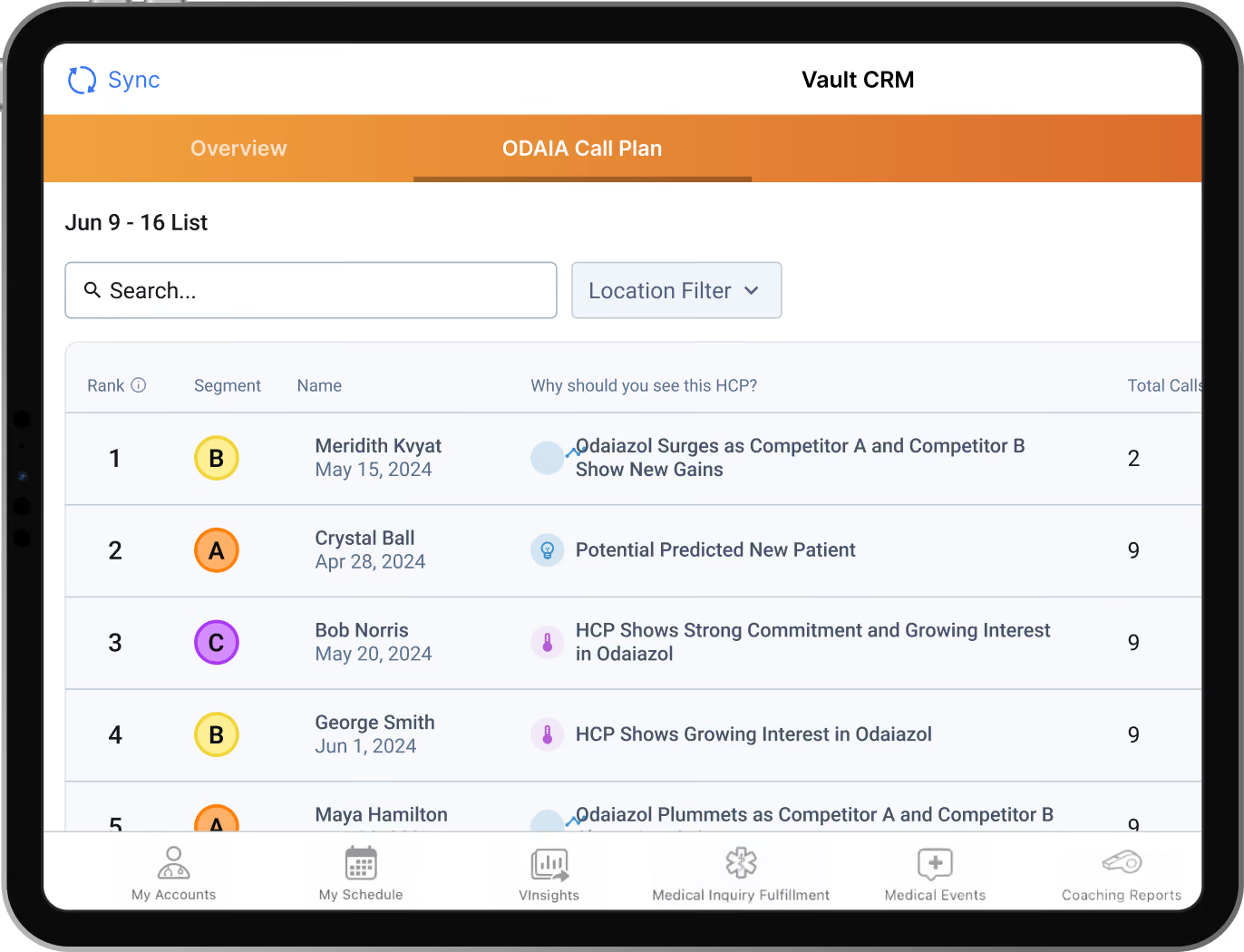
By leveraging AI-powered segmentation (PowerScores), real-time insights, and weekly refreshed curated call plans, these organizations experienced a new level of field productivity and strategic focus —proving that dynamic targeting isn’t just more efficient, it’s more effective.
Dynamic targeting leverages AI-powered prioritization to preserve market share, mitigate prescription decline, and drive measurable gains in call volume, market reach, and resource allocation across pharmaceutical field teams.
Proven Results:
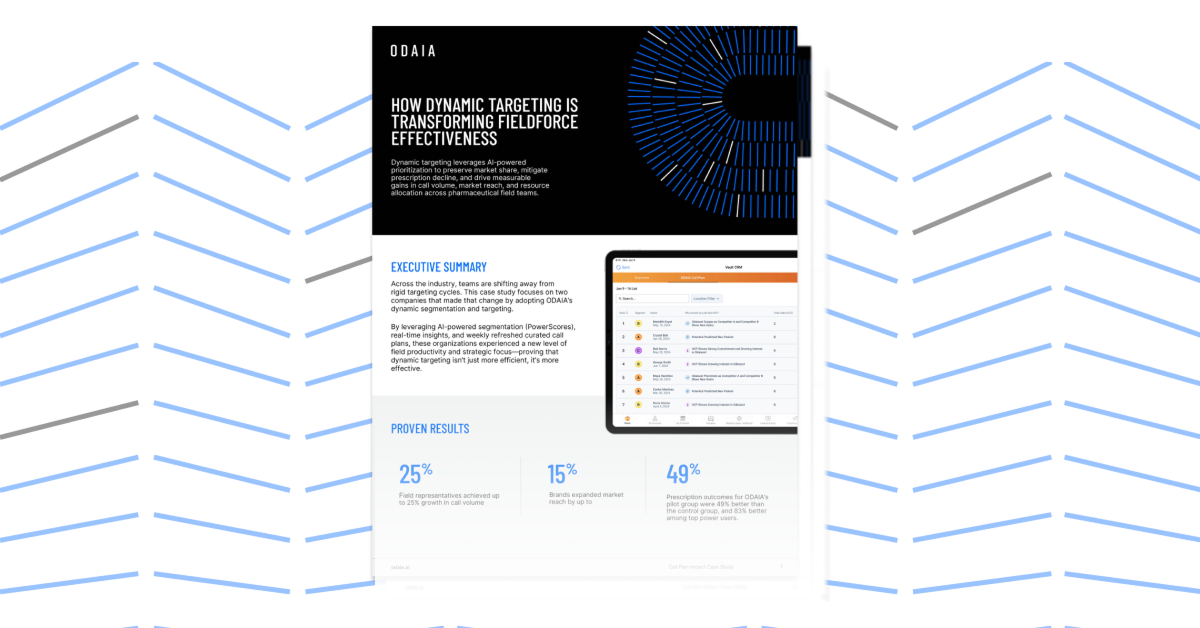
- Field reps achieved 25% increase in call volume across multiple organizations & territory structures
- Brands expanded market reach by up to 15% by identifying new high-potential HCP relationships
- Prescription outcomes for pilot users were 49% better than the control group
The Challenge
Static Targeting in a Dynamic Market
Outdated Segmentation is Limiting the Field: Before implementing ODAIA, both companies relied on traditional, consultant-driven targeting approaches that couldn’t keep pace with therapidly evolving pharmaceutical marketplace.
- Static Lists: HCP segmentation was refreshed only semi-annually, meaning field reps were working with outdated evaluations for months at a time. This means reps lacked the ability to identify emerging opportunities outside their predetermined target lists.
- Limited Market Visibility: With call plans locked in months in advance, reps were limited in their ability to see behavioral changes and act on them. Those who attempt to manually correlate numerous dashboards and spreadsheets find different conclusions and can easily miss key insights hidden in a mountain of data points.
- Inefficient Resource Allocation: Static segmentation meant reps often spent valuable selling time on the wrong HCPs while missing chances to engage higher potential providers. They also spent tremendous time manually reviewing data sources and dashboards trying to consolidate the right information to plan their days.

The Solution
ODAIA’s AI Platform and Dynamic Targeting
From Static Lists to Real-Time Intelligence: ODAIA transformed how both companies approached field planning, HCP segmentation, and execution through three core capabilities:
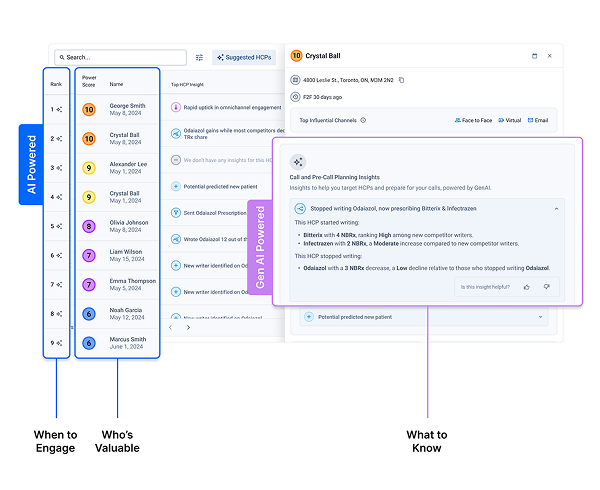
- AI-Driven PowerScores: By analyzing real-time commercial data, continuously monitoring changes in HCP activity trends, patient volumes, market movements, and engagement history, ODAIA generates a PowerScore for each HCP. These scores dynamically evaluate prescribers by potential and actual value.
- Weekly Refreshed Territory Call Plans: Reps working with ODAIA receive weekly prioritized call plans. These plans incorporate predictive insights, and territory specific opportunities, ensuring reps focus their efforts where they’ll have the greatest impact.
- Summarized Pre-Call Insights: By aggregating data and signals into insights, ODAIA reduces the burden placed on reps to correlate their own findings. HCP insights are presented in plain text with supporting data points, giving reps the confidence to engage their customers.
The Results
Measurable Impact Across the Field
How Results Were Measured: The study included a detailed implementation and pilot phase, to ensure findings reflected genuine impact.
Key Performance Results Among Top Users
Pilot vs Control Group Comparison
Mitigated Loss Analysis for Company B
The drug/ brand evaluated for Company B is a mature product in a competitive market experiencing overall prescription volume decline. Against this, ODAIA users demonstrated meaningful mitigation of market share loss compared to the control group.
Key Takeaways
Proven ROI Through Dynamic Targeting
ODAIA delivers measurable productivity gains through strategic HCP prioritization. Customer data demonstrates that field teams using dynamic targeting achieve higher call volumes, expanded market reach, and superior prescription outcomes.
For pharmaceutical companies still relying on static, semi-annually refreshed target lists, the opportunity cost is clear. In a dynamic market, dynamic targeting isn’t just an advantage, it’s essential for competitive field performance.
The Productivity Formula
Dynamic segmentation and targeting form the foundational layer that unites previously siloed teams—marketing, commercial leadership, field teams, and operations—while driving field productivity across the organization.
By consolidating disparate data into unified, continuously updating PowerScores, ODAIA creates the infrastructure for data-backed decision-making across the entire organization.
- Better Prioritization: ODAIA identifies highest-value HCPs for each strategic focus, eliminating guesswork and ensuring time is spent where it matters most.
- Time Savings: Streamlined planning and consolidated intelligence enable more dally customer interactions, breaking through the productivity potential of manual processes.
- Expanded Reach: Additional calls target new HCPs, growing market coverage and capturing opportunities competitors miss.
- Better Outcomes: Quality time with the right providers, at the right moment, drives superior prescription results.